Build Configuration History
A bare build record — how many units, on what date, with a comment — is enough for simple production. Real builds carry more. Each one has a configuration: which components were left off as "do not populate", which storage location each part was pulled from when stock sat in several, and, with lot control, the exact lots that went into the run.
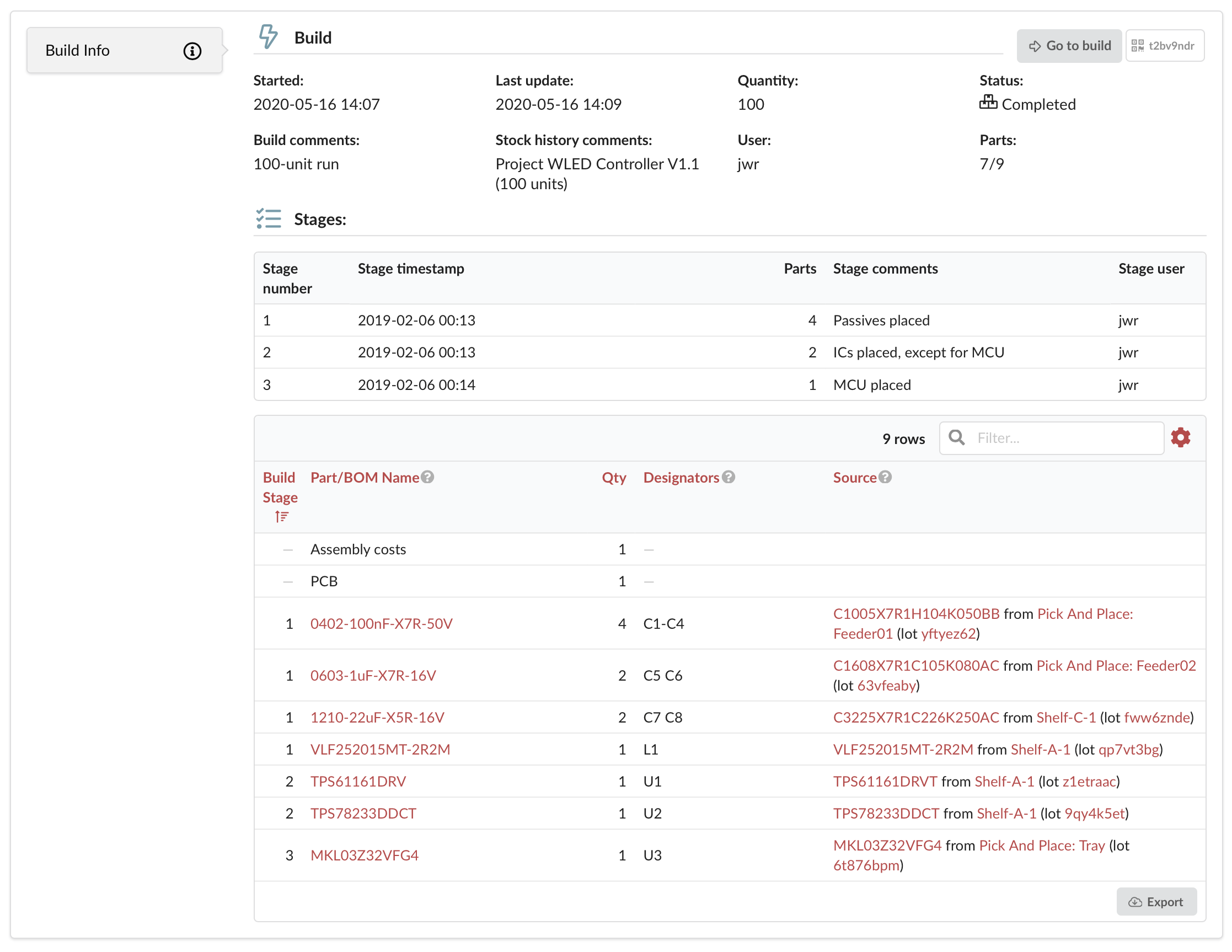
PartsBox stores that whole configuration with every build, not just the summary. You enter it on the project build screen, including for multi-stage builds, where the configuration can get detailed. Afterward it stays attached to the build, so any time later you can open a past run and see exactly how it was made: what was populated, where the parts came from, and which lots were consumed.
That record is what lets you reproduce a good build, investigate a bad one, and answer an auditor's question about a specific production run months after it shipped. Each build carries its own ID Anything™ code — print it on a label, put it on the devices from that run, and a scan brings the record back long after anyone remembers the details.
Stock used, and what it cost
Every recorded build has a Stock Used view showing what the run consumed. Without lot control it is a summary: part names, quantities, designators, and the locations they came from. With lot control it is the full account — each lot by name, the quantity drawn from it, its cost, and what remains on it now. The material cost of the run is computed from the actual lots consumed, not an average, so per-batch build costing is exact. You can manage the consumed lots straight from this view: move what is left, adjust counts after a recount, tag lots, or set custom fields, many at a time.
Multi-stage builds at a glance
For a build that runs in stages, the build screen shows how far it has progressed — which stages are done and which remain. The example below is a multi-stage build with only some passives placed so far.
Build history is in every paid plan, starting with Essentials. It is not in the free Maker plan.